First foods, one ingredient at a time
Why single-ingredient first foods make early feeding calmer — and easier to understand.
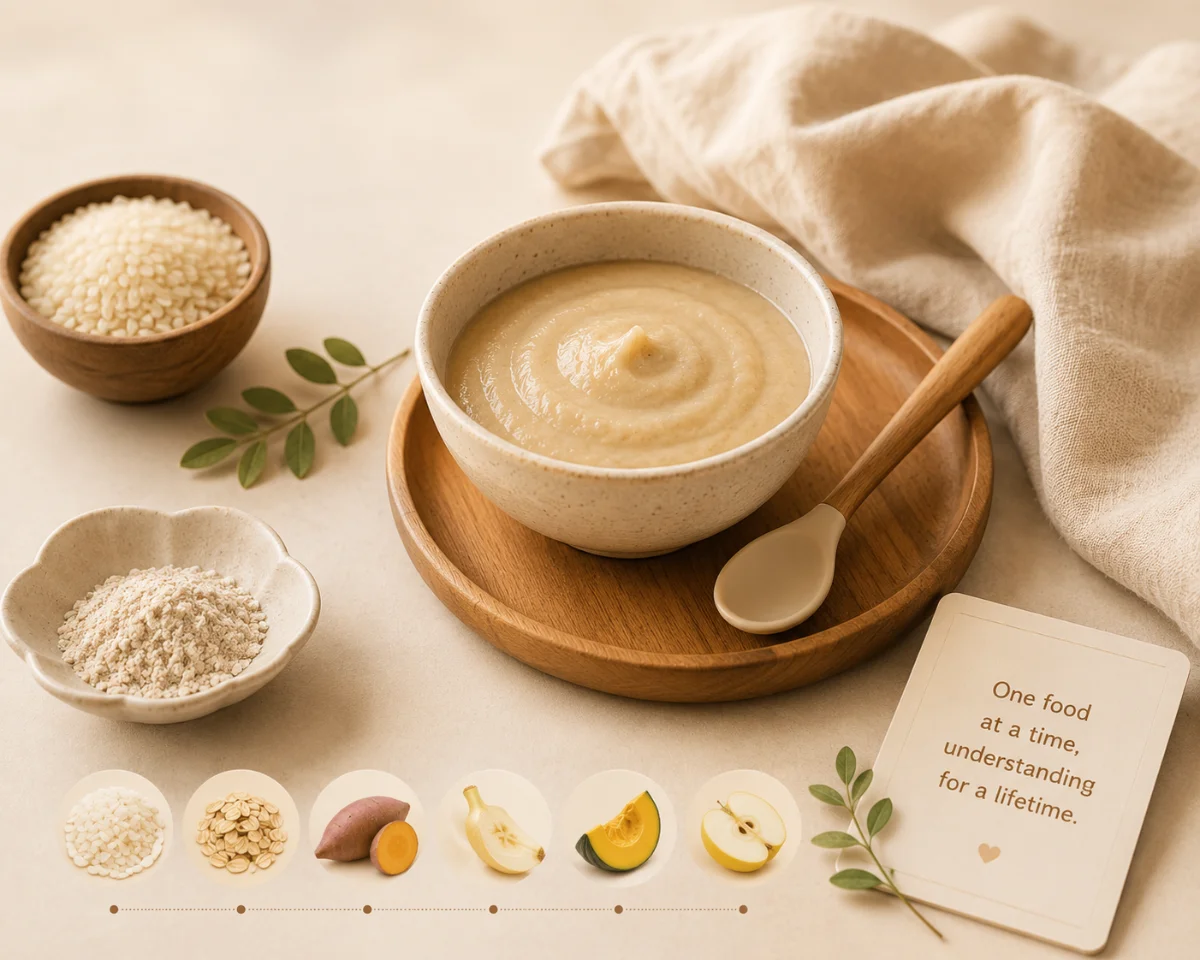
When solids begin, simplicity helps. Offering one single food at a time — and staying with it for a few days — is a widely recommended approach that lets you learn how each food suits your baby before moving on.
Why one at a time
- Clarity. If a food doesn’t agree with your baby, a single-ingredient meal makes it far easier to identify.
- Taste learning. Babies get to know real, unmasked flavours — the natural taste of the grain or vegetable itself.
- Honest labels. A one-ingredient food has one line on the ingredient list. Nothing hidden.
Allergen introduction
Current IAP guidance does not recommend delaying common allergenic foods beyond six months without reason; introducing them one at a time, at home, helps you watch your baby’s response. Discuss your family history with your pediatrician, especially if there is a history of allergy.
Building up
Once several single foods are going well, they can be combined — a little mashed fruit or soft-cooked vegetable stirred through a porridge. Keep salt and sugar out in the first year, as ICMR–NIN advises.
A note on our guidance. Breastfeeding is best for babies. WHO recommends exclusive breastfeeding for the first 6 months and continued breastfeeding, alongside safe complementary foods, up to 2 years and beyond. This article is general educational information in line with the Infant Milk Substitutes, Feeding Bottles and Infant Foods Act, 1992 (IMS Act) and is not a substitute for advice from your pediatrician.
- •WHO. Complementary feeding guiding principles (2003).
- •Indian Academy of Pediatrics. IYCF Guidelines (2016).
- •ICMR–National Institute of Nutrition. Dietary Guidelines for Indians (2024).
General educational information, published in line with the IMS Act, 1992 and FSSAI regulations. Not a substitute for advice from your pediatrician.