Why we sprout our ragi (and what it changes)
Sprouting is an old kitchen step with a real purpose. Here is what happens when finger millet is sprouted before milling.
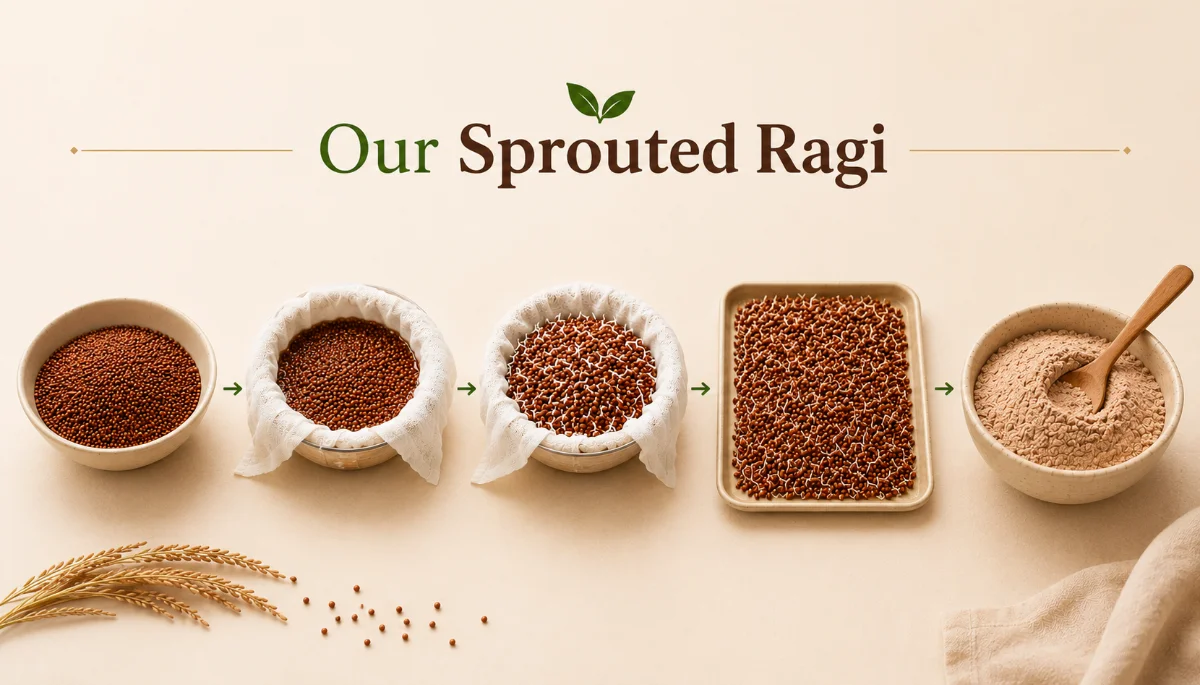
Finger millet — ragi — has been a trusted grain in South Indian kitchens for generations. At Namma Hearth we sprout whole finger millet on damp muslin for up to 48 hours before slow-drying and stone-milling it. Sprouting, also called malting, is a traditional step, and food-science literature explains why families have long relied on it.
What sprouting does
- Softens the grain. Germination activates the grain’s own enzymes, which begin breaking down starches into simpler forms — part of why sprouted-grain porridges tend to be smoother and milder.
- May improve mineral availability. Published studies on malted finger millet report reductions in phytate, an anti-nutrient that can bind minerals such as iron and calcium.
- Keeps it wholegrain. We mill the whole sprouted grain, so the fibre and natural goodness of the millet stay in.
Ragi in the Indian diet
The ICMR–NIN food composition tables record finger millet as a grain valued for calcium and iron among Indian cereals. We describe these as characteristics of the ingredient rather than health promises — food is nourishment, not medicine.
One clean ingredient
Our Sprouted Ragi Cereal is 100% sprouted finger millet, with nothing added. That is a deliberate choice: a first food you can read aloud in a single line.
A note on our guidance. Breastfeeding is best for babies. WHO recommends exclusive breastfeeding for the first 6 months and continued breastfeeding, alongside safe complementary foods, up to 2 years and beyond. This article is general educational information in line with the Infant Milk Substitutes, Feeding Bottles and Infant Foods Act, 1992 (IMS Act) and is not a substitute for advice from your pediatrician.
- •ICMR–National Institute of Nutrition. Indian Food Composition Tables (2017).
- •Published reviews on malting/germination of finger millet and phytate reduction.
- •FSSAI. Food Safety and Standards Act, 2006 — claims must be truthful and not misleading.
General educational information, published in line with the IMS Act, 1992 and FSSAI regulations. Not a substitute for advice from your pediatrician.