Responsive feeding: letting baby set the pace
Feeding is a conversation. Reading your baby’s cues builds a calmer, healthier relationship with food.
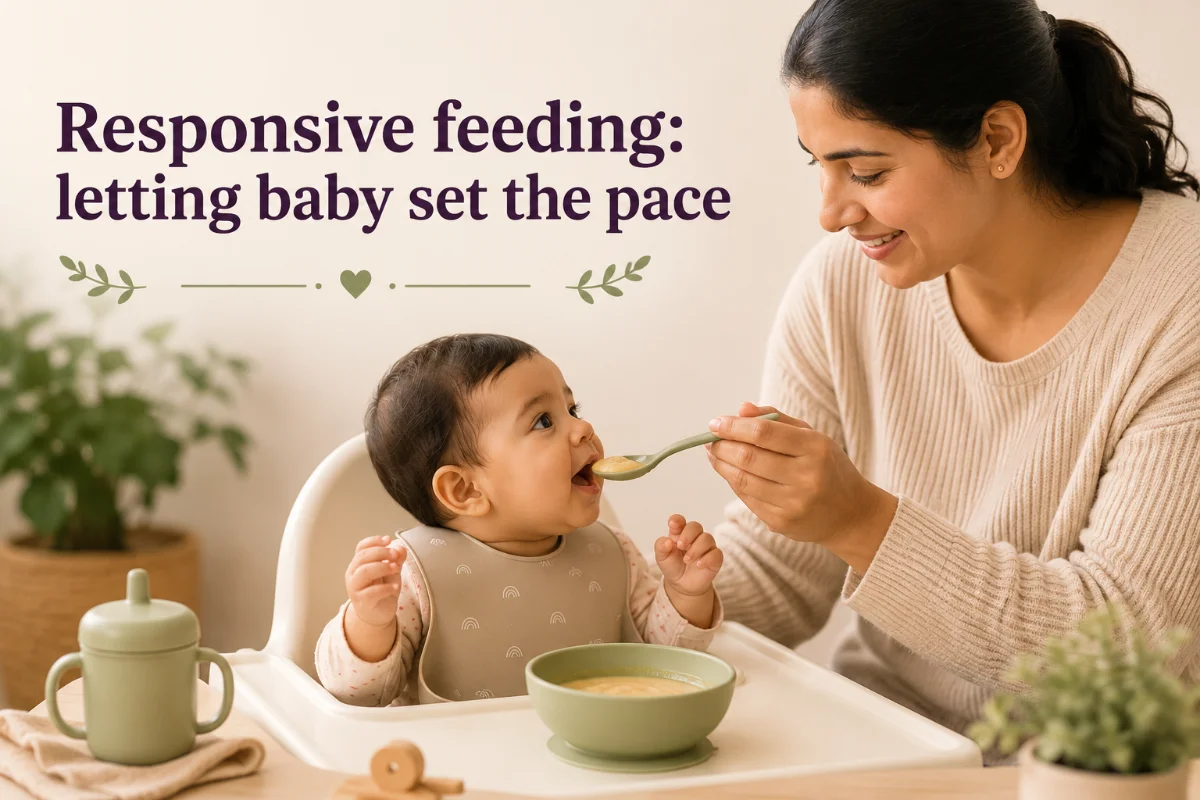
WHO and the IAP both describe responsive feeding as a cornerstone of healthy complementary feeding. It means feeding slowly and patiently, encouraging without forcing, and responding to your baby’s signals of hunger and fullness.
What it looks like
- Offer food when your baby shows hunger cues — leaning in, opening the mouth, reaching.
- Stop when they signal fullness — turning away, closing the mouth, slowing down.
- Make mealtimes calm and free of pressure or distraction.
- Let your baby explore — mess is part of learning to eat.
Why it matters
Responsive feeding supports a baby’s natural ability to regulate appetite and helps build a positive relationship with food. Forcing the last spoon can do the opposite.
Patience with new foods
Babies may need to be offered a new food many times before accepting it. That is normal. Keep offering, without pressure, and keep milk feeds going through the first year.
A note on our guidance. Breastfeeding is best for babies. WHO recommends exclusive breastfeeding for the first 6 months and continued breastfeeding, alongside safe complementary foods, up to 2 years and beyond. This article is general educational information in line with the Infant Milk Substitutes, Feeding Bottles and Infant Foods Act, 1992 (IMS Act) and is not a substitute for advice from your pediatrician.
- •WHO. Guiding principles for complementary feeding of the breastfed child (2003).
- •Indian Academy of Pediatrics. IYCF Guidelines (2016).
General educational information, published in line with the IMS Act, 1992 and FSSAI regulations. Not a substitute for advice from your pediatrician.